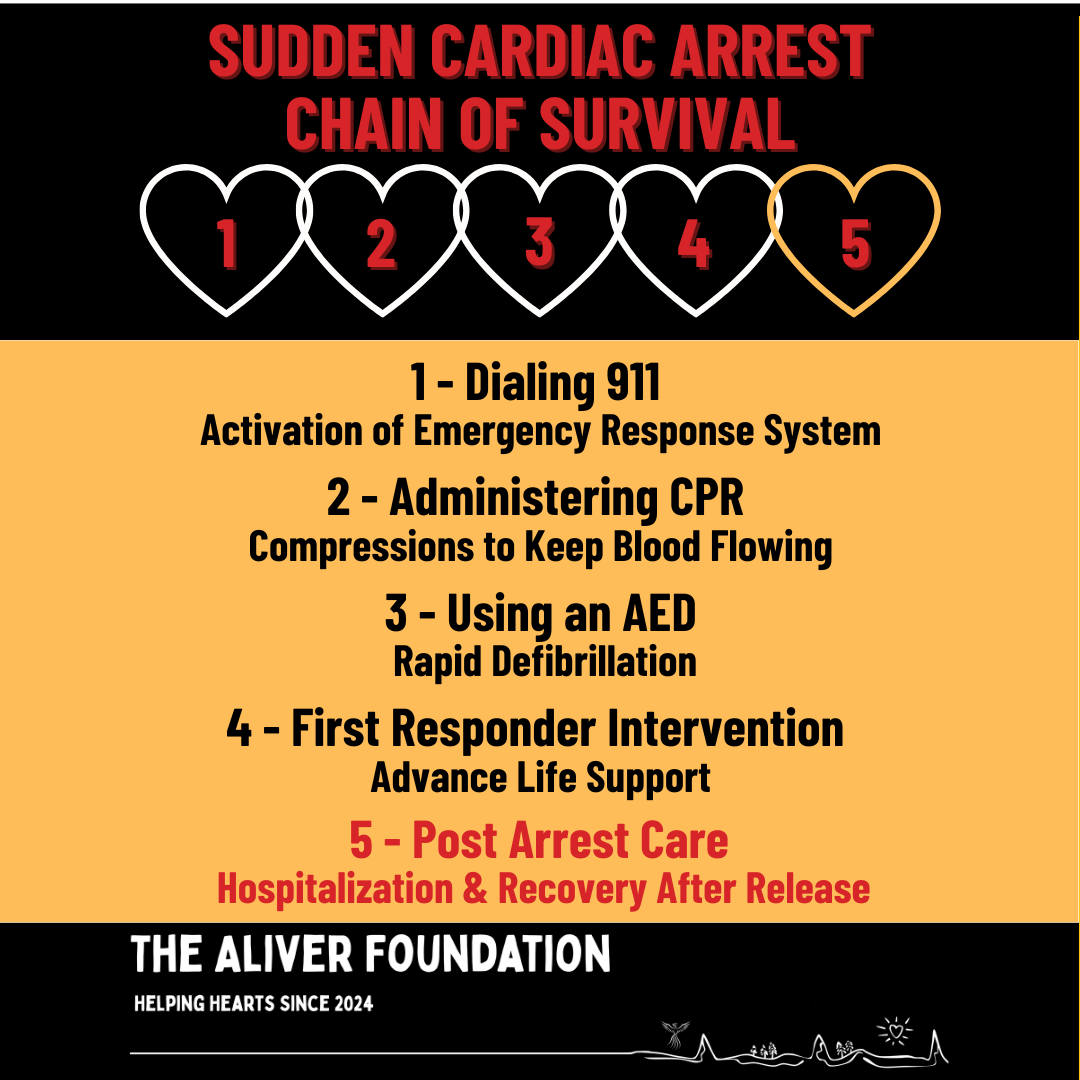
Cardiac Arrest Chain of Survival
Each of the five links in the Cardiac Arrest Chain of Survival is crucial when someone experiences cardiac arrest.
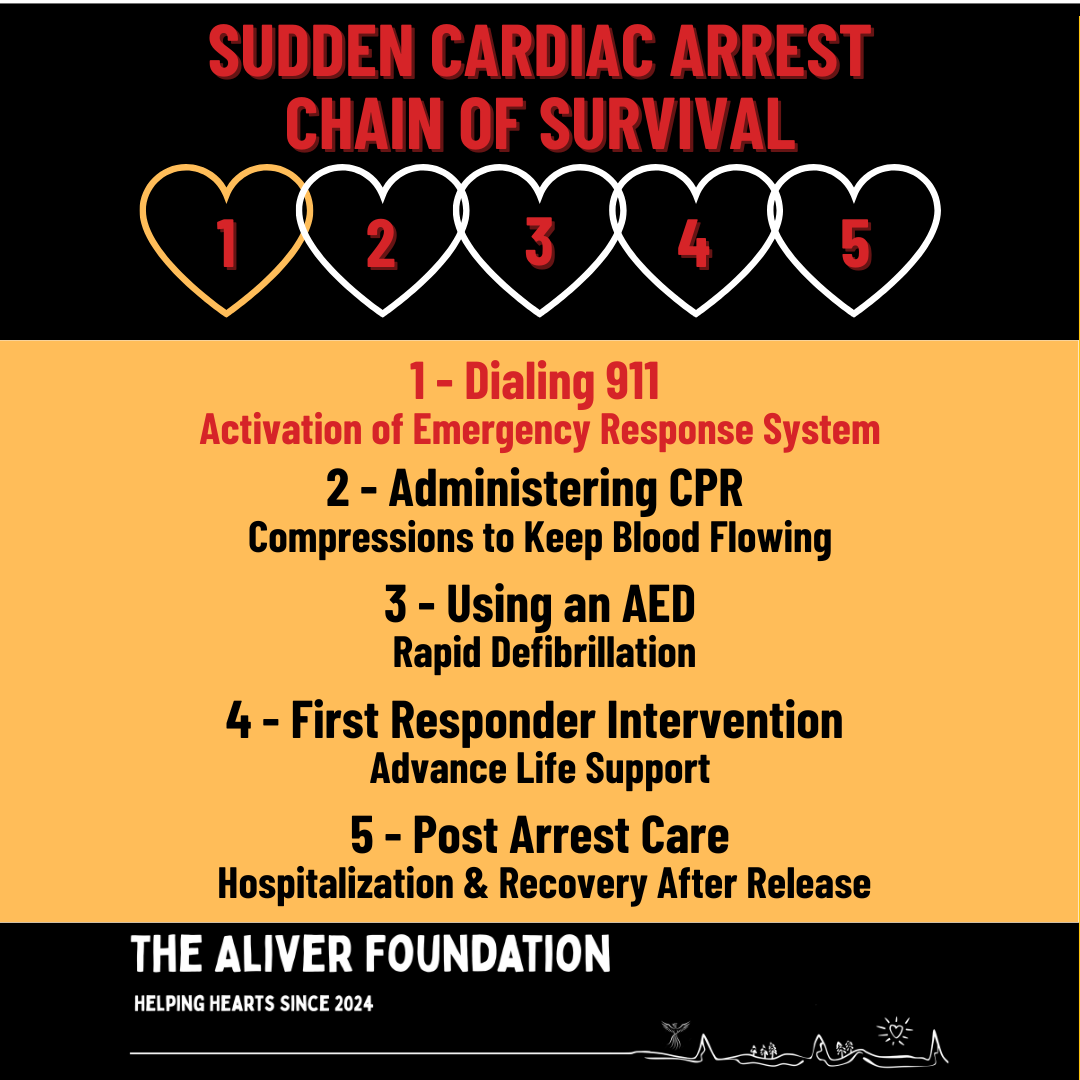
Not all heart rhythms are shockable, which is why the first link in the Cardiac Arrest Chain of Survival (calling 9-1-1 to activate the emergency response system) is extremely critical in order for a life to be saved. This bystander action ensures that professional first responders are dispatched without delay and can deliver the advanced life support required to give a person experiencing cardiac arrest the best possible chance of survival. Calling 9-1-1 immediately not only dispatches first responders, but the voice on the other end will help you stay calm and walk you through next steps. Furthermore, the 9-1-1 dispatcher can also direct you to the nearest AED.
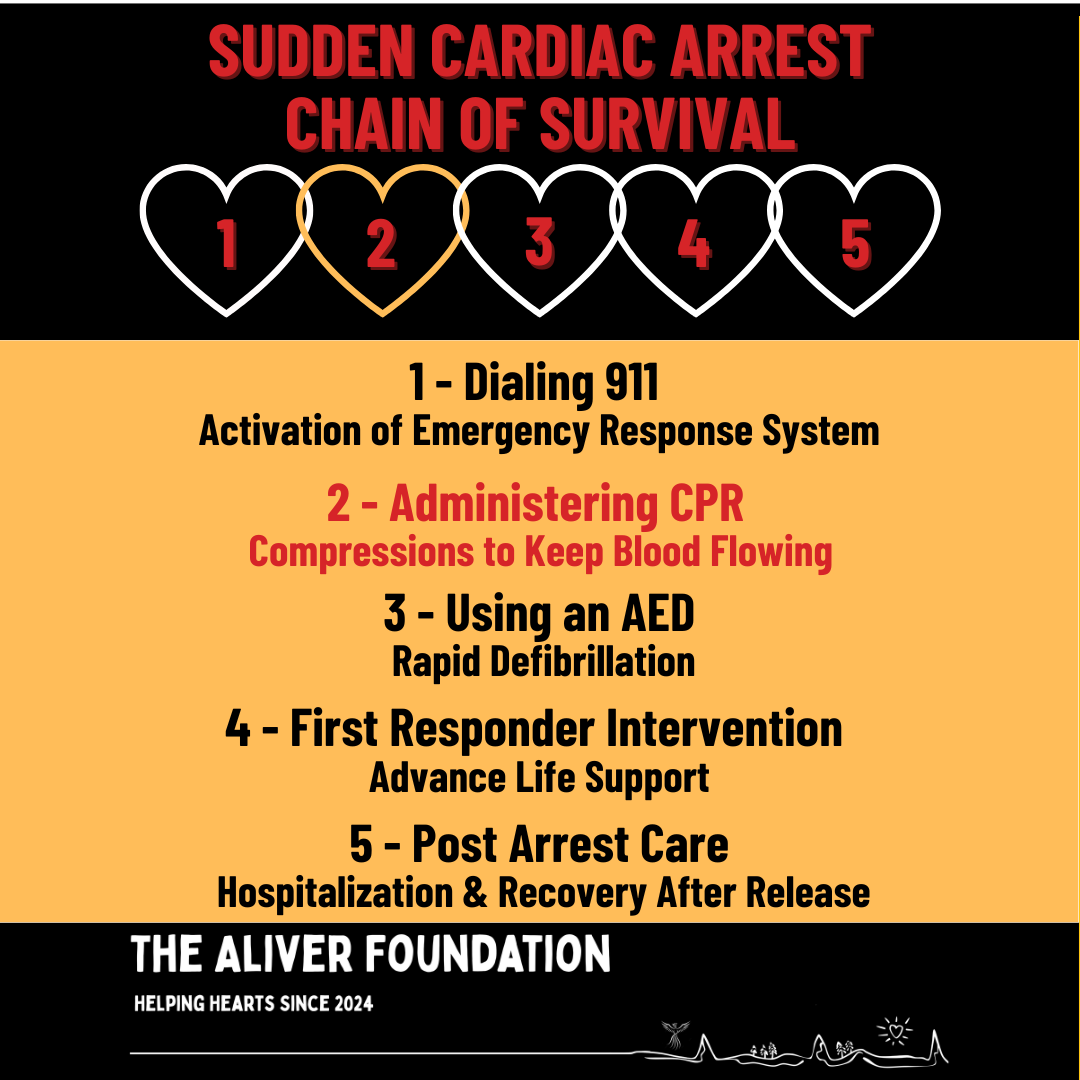
High-quality CPR is essential when someone experiences cardiac arrest because it keeps oxygen-rich blood circulating when the heart can no longer pump on its own. The second link in the Cardiac Arrest Chain of Survival (administering CPR compressions to keep blood flowing) is critical. This early action sustains vital blood flow to the brain and other organs, buying precious time until professional first responders arrive to provide advanced life support to give the person the best possible chance of survival.
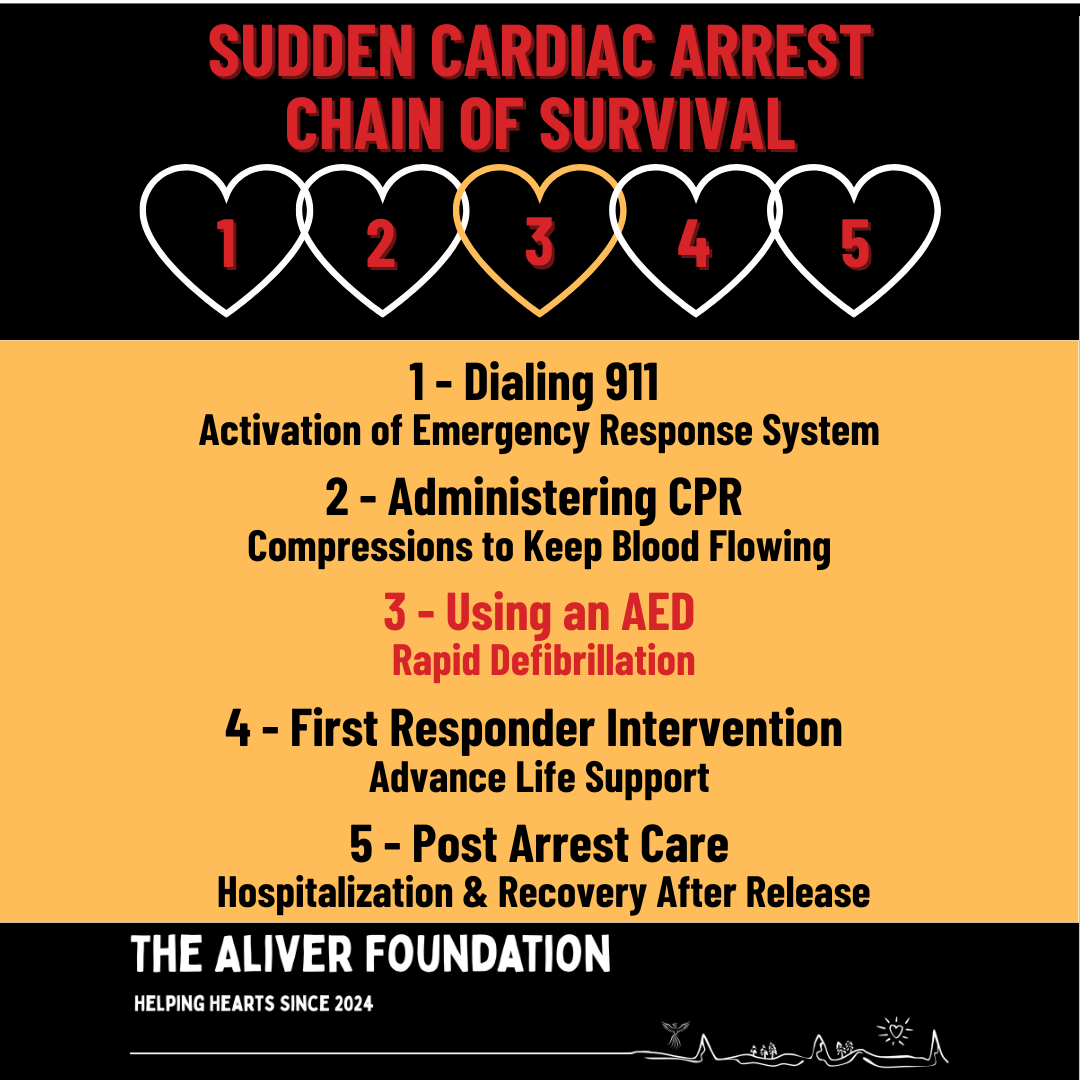
Rapid defibrillation is a vital component of cardiac arrest response because it can restore a shockable heart rhythm. The third link in the Cardiac Arrest Chain of Survival (using an AED for rapid defibrillation) is important because while not all cardiac arrest rhythms are shockable, an AED quickly analyzes the heart and will deliver a shock if it detects a rhythm that can benefit from one. When a shock is needed, every minute without defibrillation can decrease the chance of survival by up to 10 percent. Early AED use helps bridge the gap until professional first responders arrive to provide advanced life support and give the person the best possible chance of survival.
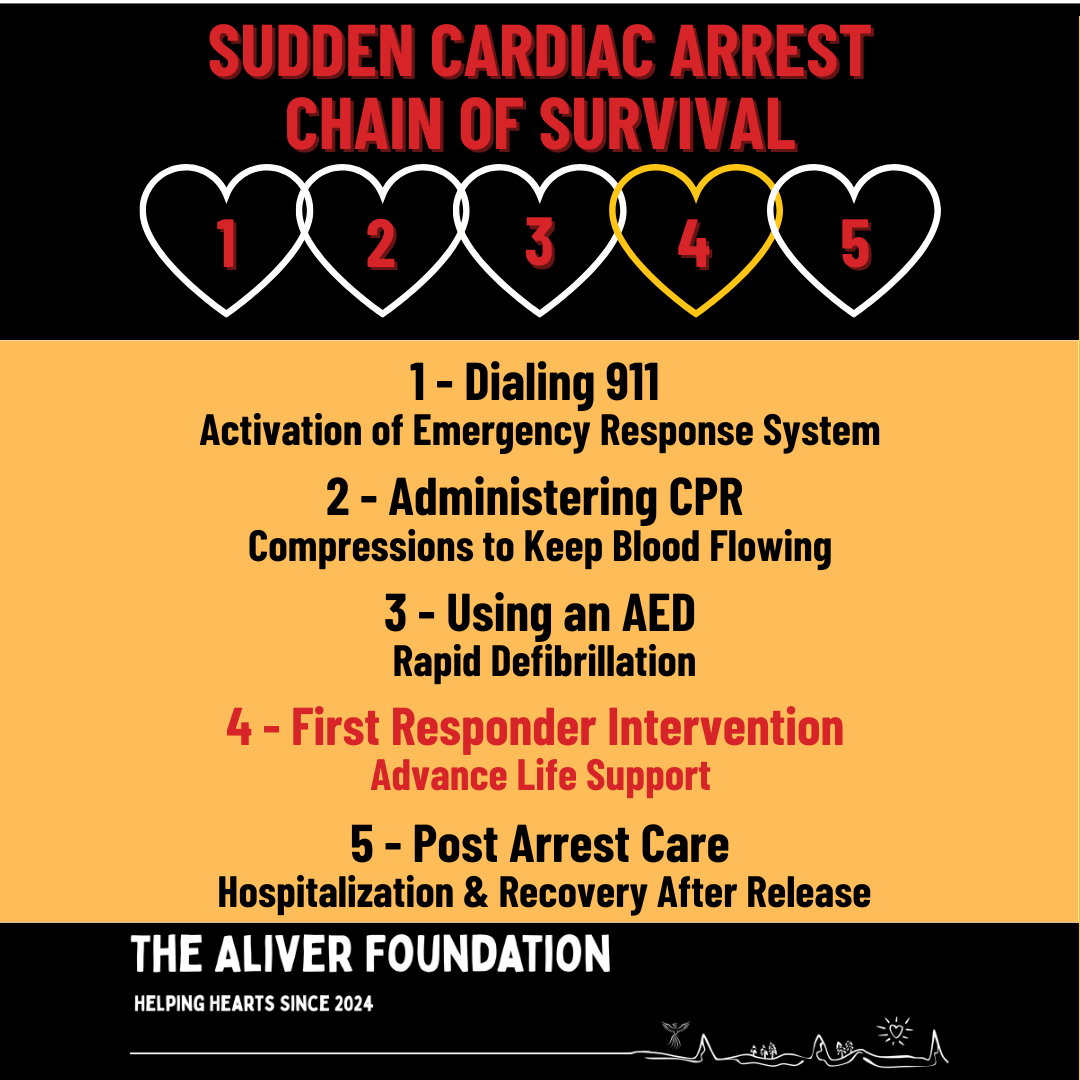
Advanced life support provided by professional first responders is a critical part of the cardiac arrest response because it delivers the medical expertise and interventions that extend far beyond what bystanders can provide. The fourth link in the Cardiac Arrest Chain of Survival (first responder intervention with advanced life support) is essential because it includes airway management, medication administration, cardiac monitoring, continued high-quality CPR, and additional defibrillation if a shockable rhythm is present. These advanced treatments help stabilize the person, address underlying causes, and improve the likelihood of restoring a viable heart rhythm. This level of care builds on the lifesaving actions already taken by bystanders and ensures that the person has the best possible chance of survival as they are prepared for transport to the hospital.